
Tools of the Trade: Human-Centered Approaches to Digital Research
Friday, October 23 – Saturday, October 24, 2026
Online | 10:30 AM – 4:30 PM Eastern
Our fourth annual technology symposium will be an exploration of the many tools and methodologies furthering genealogical research and historical preservation. Sessions will cover geographic mapping, digitization techniques, open data sources, DNA painting, and the shift in artificial intelligence (AI) from chatbots to agents.
Leading genealogists and experts from related fields will offer insights and practical guides to working with contemporary tools with awareness, confidence, and skill.
Presenters include Nicole Dyer, Mark Thompson, Jarrett Ross, Matthew Bruinooge, and Aimee Rose-Haynes, with additional speakers to be announced. Please check back here regularly for schedule updates and session descriptions!
All sessions will be recorded and made available to registrants for on-demand viewing through December 24, 2026.
Pricing
- NYG&B Member Early Registration: $189 (ends October 7, 2026; after that, the registration rate for members is $215)
- General Registration: $259
Schedule
All times Eastern.
Friday, October 23: Foundations
- 10:30 – 10:45 a.m.
Opening Remarks
Matthew Bruinooge - 10:45 – 11:45 a.m.
Digital Tools for the Modern Genealogist: Leveraging Technology in Research
Aimee Rose-Haynes - 12:00 – 1:00 p.m.
Documentation for Cultural Heritage Objects: Archival Best Practices
Matthew Bruinooge - 1:00 – 2:00 p.m.
Lunch - 2:00 – 3:00 p.m.
The Interesting Things I Learned Painting My DNA
Jarrett Ross - 3:15 – 4:15 p.m.
How Far Do You Go? Revisiting Existing Research in an Era of AI and Full-Text Search
D. Joshua Taylor
Saturday, October 24: AI and the Research Process
- 10:30 – 11:30 a.m.
From Chatbot to Genealogy Research Assistant: The Agentic Shift
Mark Thompson - 11:45 a.m. – 12:45 p.m.
The Genealogist's AI Research Assistant: When to Hand Off, When to Step In
Nicole Dyer - 12:45 – 1:45 p.m.
Lunch - 1:45 – 2:45 p.m.
Reasonably Exhaustive with AI: Using Agentic Tools to Find Relevant Sources
Nicole Dyer - 3:15 – 4:00 p.m.
Panel Discussion
Matthew Bruinooge, D. Joshua Taylor, and others
Session Descriptions
Digital Tools for the Modern Genealogist: Leveraging Technology in Research
Aimee Rose-Haynes
This presentation explores how the digital age has made family history research faster, more accurate, and accessible from almost anywhere. Attendees will learn practical strategies for searching newspapers, learn what OCR means and how it’s helpful, navigating select New York’s digital databases, and exploring Cherokee records and research resources available online. The session also covers digital organization, efficient research planning, evaluating evidence, and citing online sources so discoveries remain credible and easy to revisit.
Documentation for Cultural Heritage Objects: Archival Best Practices
Matthew Bruinooge
How do you scan something that isn't flat? Cultural heritage objects come in all shapes and sizes: a cup, a headstone, or even an entire house. This session provides a practical guide to documenting objects in three dimensions using just a camera and a computer. We will cover best practices from start to finish—capturing the object, building a 3D model, and archiving the result responsibly by keeping the source photographs, metadata, and the finished model all in one place. We will also take a look at next steps with more advanced tools, comparing photogrammetry and LiDAR, as well as additional options for long-term storage and 3D replication. No prior experience is required, though some familiarity with digital files is helpful.
The Interesting Things I Learned Painting My DNA
Jarrett Ross
This talk explores what can be learned by visualizing which pieces of our DNA come from each ancestor, known as DNA painting or chromosome mapping. DNA painting can reveal surprising insights about the DNA you've inherited and even help you identify how unknown matches connect to specific branches of your family tree. This talk covers how to do DNA painting, analyzing the results for more in-depth understanding, and more advanced DNA painting techniques such as Visual Phasing.
How Far Do You Go? Revisiting Existing Research in an Era of AI and Full-Text Search
D. Joshua Taylor
Full-text search, handwritten text recognition, and AI-assisted tools have made searchable what once took a page-by-page slog, but no researcher has time to re-run every closed case through every new tool. This session walks through three research lines closed (or marked impossible) years ago, revisits them with technology that wasn't practical a year ago, and shows what changed, what did not change, and what might be possible. Together we will explore a working framework, grounded in the Genealogical Proof Standard's "reasonably exhaustive search," for deciding when existing research deserves another look as technology changes.
From Chatbot to Genealogy Research Assistant: The Agentic Shift
Mark Thompson
The biggest AI shift in 2026 isn't a new language model. It's the move from chatbots to AI agents that can execute research tasks on your behalf. Today's AI can build a research plan, work across entire record collections, follow evidence from one source to the next, and report back with findings and sources you can verify. The shift is from "one and done" chat requests to research workflows that can be run time and again, using different ancestors, jurisdictions, and record sets. You'll learn how to scope an agentic workflow, choose the right tool for each task, and, most importantly, apply your hard-earned genealogy judgment to keep results research-grade. We'll also look at where these capabilities are headed and what that means for how you should organize your research today. Join Mark Thompson for a close look at the moment AI stops being a chatbot and starts working as your research assistant.
The Genealogist's AI Research Assistant: When to Hand Off, When to Step In
Nicole Dyer
AI excels at transcribing difficult handwriting, recognizing naming patterns, and synthesizing information across dozens of sources. But human skill and experience consistently outperform AI when it comes to searching databases, tracking down elusive sources, analyzing genetic evidence, and deciding what belongs in a proof argument. Prioritizing research steps, weighing conflicting evidence, and writing a compelling report remain deeply human strengths. Each stage of the research cycle offers clear opportunities to delegate to your AI research assistant and moments where your own judgment and experience remain irreplaceable.
Reasonably Exhaustive with AI: Using Agentic Tools to Find Relevant Sources
Nicole Dyer
Meeting the reasonably exhaustive standard requires finding as many relevant collections and sources as possible — a task that has always been time-consuming and easy to do incompletely. Agentic AI tools like Claude in Chrome and Perplexity's Comet can now navigate library catalogs, click through finding aids, and compile collection lists autonomously. Deep Research tools synthesize historical and legal context, revealing which record types should exist for your ancestor's time and place.
About the Presenters
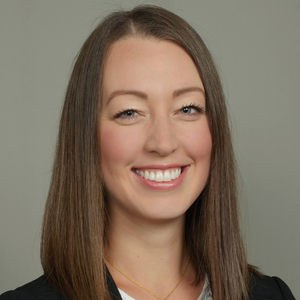
Nicole Dyer is a professional genealogist specializing in Southern United States research and genetic genealogy. She is the creator of FamilyLocket.com and co-hosts the Research Like a Pro Genealogy Podcast with her mother, Diana Elder, AG. Nicole co-authored Research Like a Pro: A Genealogist’s Guide, Research Like a Pro with DNA, and Research Like a Pro with AI with Diana Elder. She is an instructor for the Research Like a Pro study groups and served as course coordinator for the Texas Institute of Genealogical Research course, “Integrating AI into Genealogical Research and Writing,” in 2025. Nicole lectures at national conferences and institutes, focusing on innovative technology applications in genealogical research, including artificial intelligence, research logs and Airtable, and essential software tools. She holds a bachelor’s degree in History Teaching from Brigham Young University. At Family Locket Genealogists, Nicole serves as project manager, editor, and researcher.
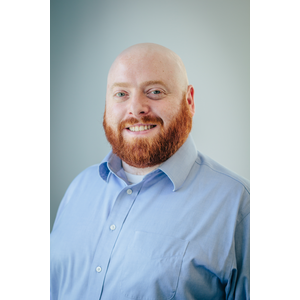
Jarrett Ross, The GeneaVlogger, is a professional genetic genealogist and YouTuber. Jarrett has built a special expertise in Genetic Genealogy, the Portuguese Jewish community of Amsterdam, southern New Jersey Jewish agricultural societies, and American Jewish genealogy, as well as extensive experience researching many other population groups. Jarrett recently left his job as the Lead Investigative Genealogist at DNA Labs International to pursue content creation and public speaking full-time. Jarrett also volunteers as a Geni curator, a Search Angel, Vice President of Triangle Jewish Genealogical Society, and on the Board of Directors for the International Association of Jewish Genealogical Societies.
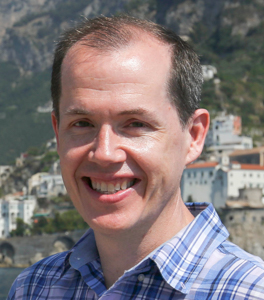
Mark Thompson is a professional genealogist, educator, and public speaker specializing in artificial intelligence in genealogy. He is a founding member of the Coalition for Responsible AI in Genealogy (CRAIGEN) and co-hosts the Family History AI Show podcast with Steve Little. Mark serves as President of the Victoria Genealogical Society and is a member of the Association of Professional Genealogists. His earlier career in senior IT leadership culminated as Vice President of IT for one of Canada’s largest oil and gas companies, where he oversaw IT governance, technology risk, and enterprise systems.
Matthew Bruinooge is Director of Digital Services at the NYG&B, where he leads digitization, AI integration, and digital infrastructure. He holds a B.A. in Computer Science and Visual Art from Brown University and an M.F.A. from Brooklyn College, where he taught courses in digital media and 3D scanning. His digitization work includes 3D documentation of art objects for the Brooklyn Public Library and private collections. Previously, he served as Director of Digital Production at Gertie, an arts organization based in Chicago. In 2025, he was a technology resident at Pioneer Works.
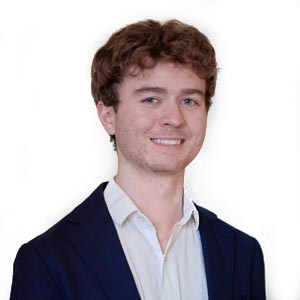
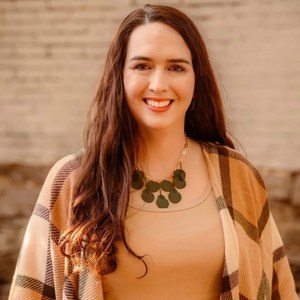
Aimee Rose-Haynes is a member of the Association of Professional Genealogists, a public speaker, and a proud citizen of the Cherokee Nation. As an experienced genetic genealogist, family historian, and local researcher, she has worked on hundreds of cases involving adoption, donor conception, unknown parentage, Native ancestry, family history, and community heritage. Combining DNA analysis, historical research, and local records, Aimee helps people reconnect with biological family members, better understand their heritage, and uncover the stories of the places and communities connected to their ancestors. She also advocates for ethical genealogy, responsible DNA use, and respectful research practices.