
What first inspired your interest in genealogy and family history, and how did that evolve into advocacy work?
My interest in genealogy began with my father. After retiring in 1981, he set out to learn more about his mother, who had died young of tuberculosis and whom he barely remembered. He and my mother traveled to the LDS Family History Library and then drove thousands of miles visiting relatives and ancestral locations. When my parents moved to Richmond, Virginia, he continued his work at the National Archives and Records Administration (NARA), along with the Library of Congress and the DAR Library—all before the Internet made research more accessible.
I joined him whenever I could, using vacation time to research in states where our ancestors had lived. By the time he passed away in 1988, I was deeply engaged. Together, we had uncovered roots dating back to 1640 in Connecticut—something I hadn’t known despite having lived there.
As I continued researching while working full time, I realized how dependent genealogy is on access to public records. When access hours at NARA became more limited, I began advocating for increased funding to support staffing, preservation, and digitization.
My professional experience in the title industry also shaped my advocacy skills. Working with the American Land Title Association, I engaged in legislative outreach and testified before Congress. In retirement, I combined these experiences, advocating for genealogy organizations and testifying in support of leadership at NARA, helping ensure continued access to the records that make family history research possible.
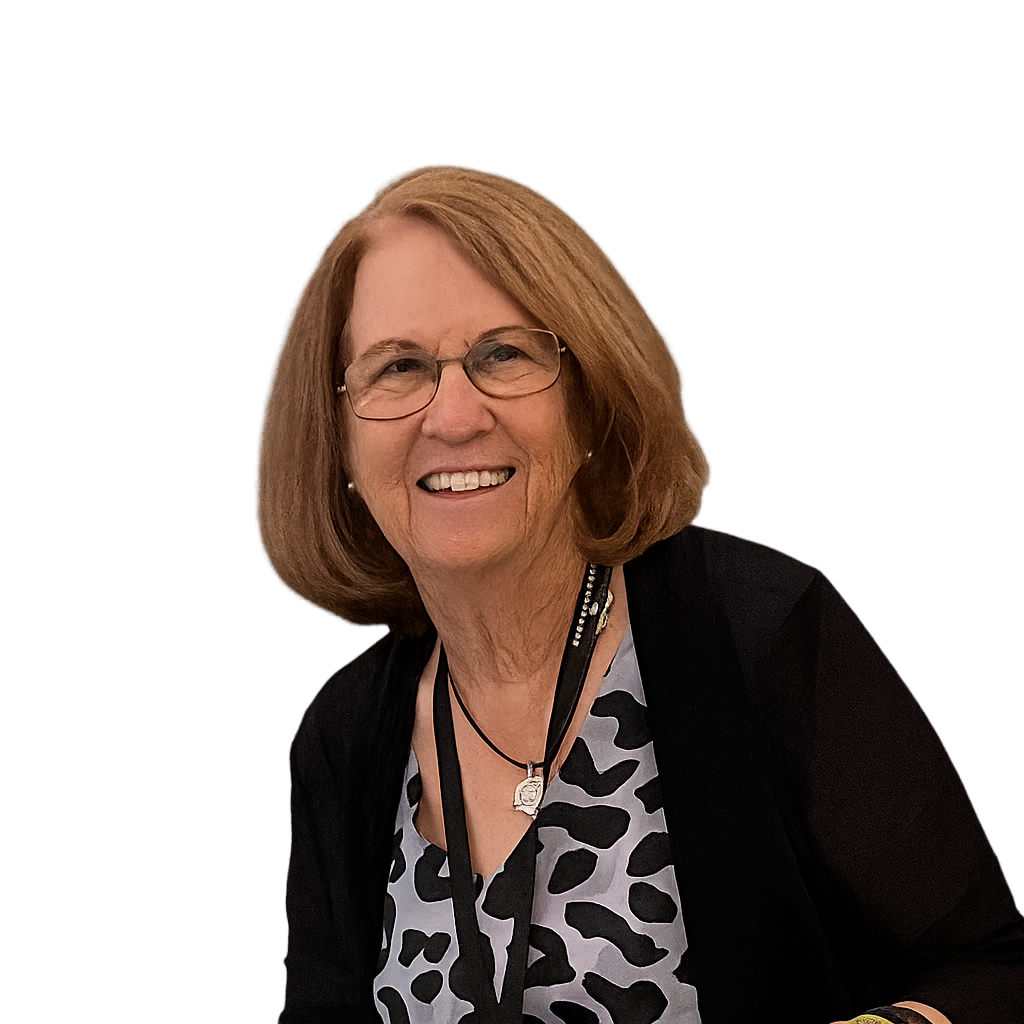
What does advocacy in records preservation and access mean to you personally?
Genealogists want access to records for a reasonable cost. We also want the government at the local, state, and federal levels to preserve those records so they will be available for future generations. Everyone is celebrating the 250th anniversary of the United States and retelling stories made possible because these records were preserved. However, too many people are unwilling to spend the funds to preserve today’s records, which are our future history.
Can you share a defining moment when you realized the importance of protecting or improving access to historical records?
Two moments, both around 2012–2013, made clear how fragile access to historical records can be.
First, the National Association for Public Health Statistics and Information Systems (NAPHSIS) approved a revised Vital Statistics Model Act without including genealogists—despite having done so in earlier versions. When we questioned this, they claimed outreach had been made, but no one in the genealogy community responded. Soon after, Oklahoma passed the new model law, and its flawed language effectively blocked access to death certificates—even for legitimate users. It was a striking example of how quickly access could be restricted, sometimes unintentionally, but with serious consequences.
The second moment came with Section 203 of the Bipartisan Budget Act of 2013, which limited access to the Social Security Death Index (SSDI), widely used by genealogists. The change was justified as a response to identity theft concerns, though later evidence showed fraud in a key case stemmed from stolen medical data, not the SSDI. By then, however, restrictions were already in place.
Together, these events revealed a pattern: policies affecting access to records were being developed with little input from the genealogy community, often under the banner of privacy or security, but with lasting unintended consequences. They underscored for me the importance of vigilance and advocacy to ensure that historically valuable records remain accessible for legitimate research.
What specific issue, effort, or record/archival collection have you been most passionate about advocating for, and why?
The Records Preservation & Access Coalition (RPAC) was formed in 1993 by the Federation of Genealogical Societies (FGS) and the National Genealogical Society (NGS). With those organizations’ recent merger, RPAC has been changed from a committee designation to a coalition, a term that better describes how the leading national genealogy organizations work together to effect open access to public records.
RPAC’s current priorities are:
- Increasing funding for NARA, including the National Historical Publications and Records Commission (NHPRC) grants.
- Working with NAPHSIS and the State Vital Records Offices to provide earlier access to death records; provide access to extended family during any embargo periods; and provide public access to indices so genealogists can be more specific when requesting copies of vital records. Indices also help improve the efficiency of records retrieval by vital records staff.
What challenges or barriers have you faced in your advocacy work, and how have you worked to overcome them?
One of the biggest challenges has been overcoming exaggerated claims about identity theft tied to vital records. NAPHSIS and state vital records officials often promote a “zero-risk” approach, leading to decades-long closures of records. In reality, documented cases of fraud linked to vital records are extremely rare compared with the millions of legitimate requests each year. Most large-scale identity theft stems from hacked databases, not public records.
To address this, RPAC and its partners have focused on data-driven advocacy—demonstrating that states with more open access do not experience higher rates of fraud than those with restrictive policies. Sharing credible research and working with analysts has been essential in pushing back against misconceptions and informing policymakers.
Another major barrier is engaging more genealogists in advocacy work. While millions of them explore family history through platforms like Ancestry, many don’t actually become involved with local, state, or national genealogical societies working to improve access to vital records. Vital records are public records, and NAPHSIS is trying to pass legislation that says vital records are private records.
Tell us about a key success or “win” that has had a meaningful impact on records preservation or access?
For preservation of records, the leadership by FamilySearch over the last 15 years to digitize all its microfilms, to introduce full text search, and to expand its digitization of records around the world is unprecedented.
To me, the second greatest initiative is the commitment of funds and volunteers by NYG&B to digitize the local records in New York through its Digitize New York initiative.
Also, FGS led many digitization projects supported by volunteers and with contributions by many individuals and sponsors in the last 30 years, which is now being continued by NGS through the current Veterans Bounty Land Records project.
We need to educate legislators as to all the initiatives genealogists continue to provide.
How do collaboration and community partnerships play a role in advancing your advocacy efforts?
One of RPAC’s major roles is coordinating a united front within the genealogical community on the important advocacy issues. Our signature initiative, Family History Hill Day, is one example, where representatives from our coalition of partners meet with their congressional representatives to educate them on the continued need for protecting federal records and supporting institutions and organizations like NARA and NHPRC. Another example is how we coordinate efforts to respond when the Model Act is introduced in a new state.
We’ve had success in organizing and delivering these coordinated advocacy efforts. When our community calls their legislators, officials often respond positively to our “asks,” because these issues shouldn’t be political or controversial.
Why is access to historical records important not just for genealogists, but for society as a whole?
Both FamilySearch and American Ancestors have been communicating to its members through recent articles and other messaging the importance of family history in providing young people with an understanding of the contributions and struggles of their ancestors.
Genealogy has evolved from trees and family group sheets to telling family stories with records and documents for those who want to know more. In the last 50 years, genealogy has moved away from foundational myths to facts that illustrate the parts our ancestors played in history.
As our country celebrates America 250 and has everyone’s attention, we all need to have personal stories that we can tell briefly about an ancestor living at the time of the American Revolution to create interest in others. What we have is another Alex Haley Roots opportunity.
How have you seen advocacy change in your time, particularly regarding tactics and strategies?
RPAC has been working with NAPHSIS leadership and many state vital records officers for more than 10 years. However, NAPHSIS and State Vital Records Officers are often only in a position for a few years, and then we have to again develop new relationships to move forward. RPAC has worked with State Liaisons for a number of years to have a broader reach, and recently the Steering Committee has filled several open spots in some of the larger states. If we actually had a genealogist willing to advocate for open records in every county in a state, we would make progress more quickly.
For the last three years RPAC has organized Family History Hill Day in Washington, D.C., which I described earlier. In April 2026, we had 18 individuals from 11 states and the District of Columbia participate. Those individuals who have regularly taken part in this event are becoming more articulate about the issues and better acquainted with the congressional senior support staff.
As a follow-up, our State Liaisons and others who did not participate in Family History Hill Day met with the legislators in their home states. We need to duplicate Family History Hill Day in as many of the state legislatures as possible. A similar process can be followed to oppose the Model Act or a comparable attack on state records access.
RPAC has been around for more than 30 years. Our objective, especially in the last five years, is to have more boots on the ground. We have written letters for years, but making personal visits and testifying at hearings has a more lasting impact. On issues where we testify and generate thousands of letters, legislators have responded. Our trademark is our “Genealogists Vote” buttons, which we hand out at Family History Hill Day and at other events and conferences.
What changes would you most like to see in the next 5–10 years?
I hope in the next few years we can convince state vital records officers to roll back the embargos on access of death records to 5 years or less, rather than the standard 50-75 years.
As a first step, death records should be transferred to a state’ archives after 25 years, where the archivists know how to preserve the records and often have good relationships with genealogists. In meetings with state vital records officers, I have said 75 years prohibits access to the records for three generations. We also want to see changes in access so third-degree relatives can have the same access as direct descendants during the embargo periods.
In every meeting with a vital records officer, I stress that the family genealogist is usually not a direct ancestor. However, if they have access to the records, they compile the information and communicate it broadly throughout the family. In almost every visit to a legislator or staff member, I find they usually begin the conversation the statement, "I have a relative who has compiled the family history.” With that door open, I make my points.
Give us a word or phrase that defines your advocacy style:
My advocacy style is proactive: “We have to talk.” One on one. Person to person. Not just once, but every year, every opportunity.